a Series of 10 —the things we stop noticing

By my count I am 3 blogs away from having written 500 blogs on my two websites. I thought it might be an interesting idea to write these remaining blogs based on the common threads that have woven themselves through the last 497 I have written — and with that said, “a Series of 10” will continue with a blog on blind spots.

It wasn’t so long ago that I figuratively operated in three boxes of various sizes — my home, the little box I used to drive to the final box that I called my place of work. The boxes would change in configuration but overall this was the bubble I operated in. Don’t get me wrong, I would leave my bubble and do other things but would always return. It was how I framed the world. I liked the ways I looked at the world and I was rewarded well for it.

Like all things this eventually changed and I with it so did I. One of the things I adopted was to walk — I walked everywhere and I did it every day all year round. I think it was late March when I remember saying to myself, “So this is what Spring looks like”. Before Spring was always days on a calendar, but now it is the change in temperature, the melting of the snow, the first plants making their way and the sound of the world waking up. In my previous boxes I never experienced any of this, and frankly didn’t really care; I knew what Spring was if anyone had bothered to ask me — but why would they? We all knew what spring was, and it had very little to do with melting snow and plants coming to life.

Spring had been the end of Q1 and Q2, and was my least favourite season. Now it is my second favourite season and I even look at the quarterly rhythm much differently. Are you sensing the metaphor yet?

We build our models for success based on what we think we know, create our bubbles with like-minded people, develop the appropriate objectives to serve the bubble, and we form our habits based on it — if we are successful we even risk becoming arrogant. We narrow our perspective, develop a lens to look at the world and create blind spots. Why be curious when you already know everything you need to know and success has proven you’re “right”.

This is wonderful until change happens which always happens.

If you didn’t notice (or were too arrogant to notice) because your bubble always works you have a problem. Most change is subtle like spring and you may find yourself never satisfied with what’s started happening and struggling to fix it. Sometimes though, the change is so dramatic the bubble bursts, your model collapses and everything needs to be reevaluated and “rebuilt”.

Our bubbles are small and the world is vast and ever changing. It is always asking, “Why do I have to speak up? Maybe you have to listen harder”.

It’s important to metaphorically listen for changes regularly, don’t assume your bubble is safe, stay curious and remember there are many more perspectives than yours. As a final thought, if your bubble does happen to burst, you can always build another that’s even bigger and better — it may be the best thing that’s ever happened.

I love me a good metaphor.

iamgpe

2 more
a Series of 10 — useful discomfort

By my count I am 4 blogs away from having written 500 blogs on my two websites. I thought it might be an interesting idea to write these remaining blogs based on the common threads that have woven themselves through the last 496 I have written — and with that said, “a Series of 10” will continue with a blog on the value of being uncomfortable.

Discomfort is one of my primary life tenets because it’s the primary driver for growth — we are hardwired for challenge and struggle and for all of us, there is no material growth without the discomfort that comes with struggle; be it intellectual, physical or emotional.

Don’t get me wrong, I enjoy being comfortable but I see it as a place to visit, not a place to live. I keep coming back to that famous quote by Nietzsche, “From the military school of life—what does not kill me makes me stronger” — symbolic as it is, it offers a reference for how to look at discomfort and what you can tolerate and by extension, the growth you can achieve. Don’t shy away from it.

I am not trying to convince you to carry my tenet but I will challenge you to look in the mirror and ask yourself to name a time you experienced material growth when it was easy. I suspect you will be hard pressed to find one.

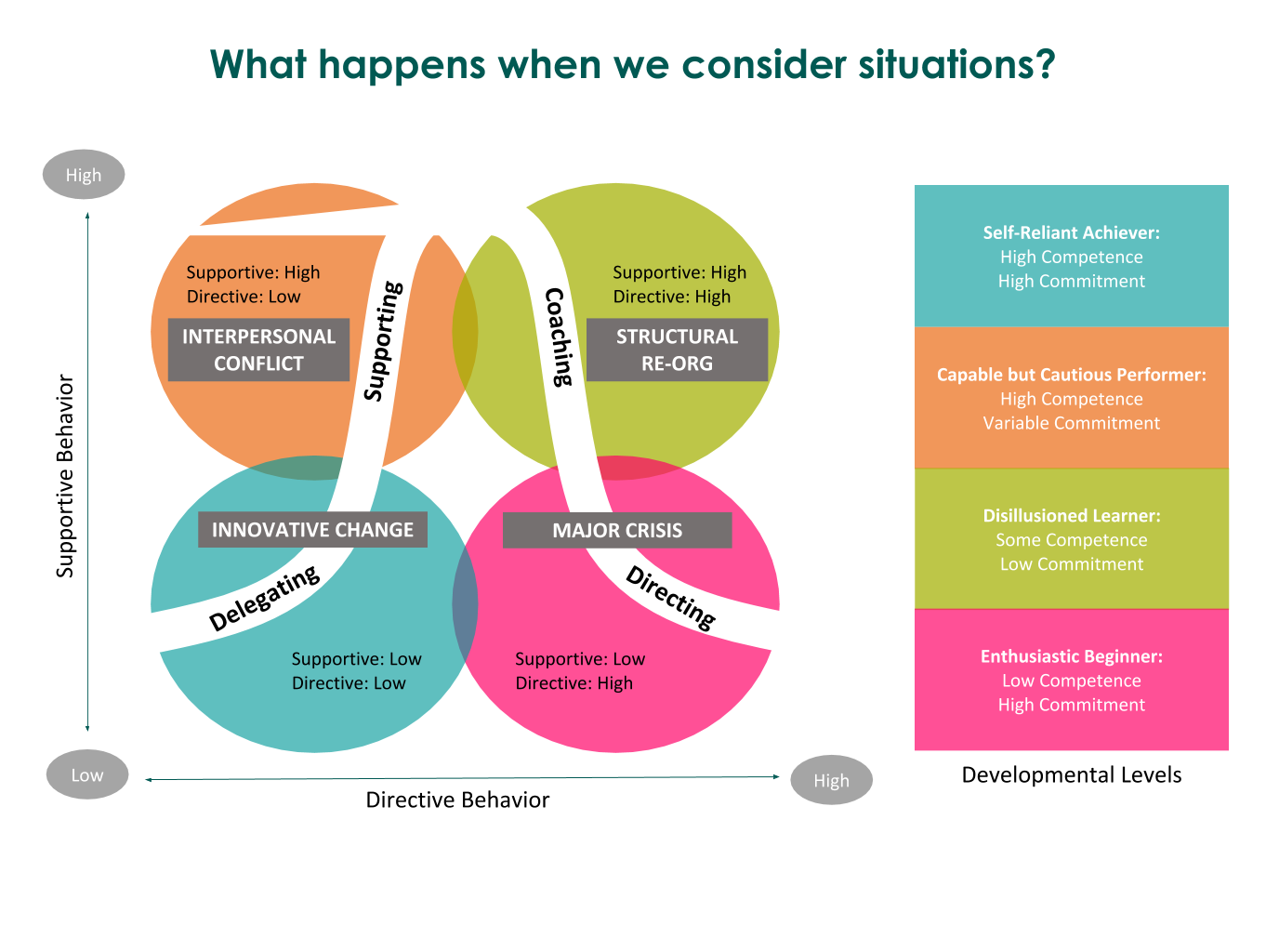
I would have stopped at this point because the importance of discomfort is a “full stop” in my mind — nothing more needs to be said. With that, I kept thinking about the Situational Leadership model developed by Dr Paul Hersey and Dr Ken Blanchard. It illustrates how discomfort comes into play if you are a leader of people, so I felt I should add a little more on the subject.

In their graphic representation of the model, you’ll see four quadrants representing a person’s skill sets and competencies — there is also a bell curve that moves through the quadrants that illustrates how each quadrant needs to be approached by a leader (see graphic). Anyone who is starting something new finds themselves in the lower left-hand quadrant. It is this quadrant that offers insight into discomfort.

You may not be so enthusiastic on my conviction about discomfort but it’s important to realize that those people in the lower quadrant, although enthusiastic, probably don’t know what they are doing, they’re frustrated with something new and uncomfortable with the struggle ahead. A leader needs to help people navigate through the discomfort (et al) to ensure success — and maybe on the way, recognize and lean into their own discomfort because leaders also need to grow.

At one time, I spent a fair bit of time with people new to the organization, and I was always quick to suggest they get comfortable with being uncomfortable. Those were the days when there was much growth for everyone involved.

It was so much fun.

iamgpe

3 more

a Series of 10 — the myth of readiness

By my count I am 5 blogs away from having written 500 blogs on my two websites. I thought it might be an interesting idea to write these remaining blogs based on the common threads that have woven themselves through the last 495 I have written — and with that said, “a Series of 10” will continue with a blog on being ready.

Let’s start with a quote from Helmuth von Moltke the Elder who was a 19th-century Prussian field marshal to frame this. He said (or wrote), “No plan of operations extends with certainty beyond the first encounter with the enemy” or if you need something more meme-ready, “No battle plan survives contact with the enemy because inevitably it goes to shit”.

Another strategist, American General Dwight D. Eisenhower more or less alluded to the same thing when he said, “No plan survives first contact with the enemy”. Almost more importantly, he also said, “Plans are nothing; planning is everything”.

They were saying that the moment you started an initiative, the act of starting makes your plan obsolete because the real world you come up against changes everything you planned for. The context was war in the case of these two strategists but it also applies to anything you may plan to do.

So, by its very definition, you will never be truly ready for what happens after you initiate your plan.

I think what Eisenhower said, “Plans are nothing; planning is everything” is the most important for readying you to drive action — it’s not the plan itself but the act of planning that readies you to take action. The act of planning will have you analyzing the situation, identifying what’s needed for success, allocating the resources, developing objectives and creating measurements of success. It will also identify a time to begin.

You will develop competencies, objectives and confidence to start with planning, and when the world pushes back, you can put your competencies in motion and work through what happens. You will never be ready until you are in motion, and only then will you know how ready you were.

And with that, I will offer a quote by Mark Twain, “A man who carries a cat by the tail learns something he can learn in no other way” — paraphrasing… there are some things you can only learn when everything goes to shit, and it’s uncomfortable, and hard.

Planning will develop your competencies to be sure but being in the shit will start to develop aspects of character such as grit, adaptability, and being resolute. So don’t spend too much time ensuring you are absolutely ready (because you will never be) — and whatever you do, don’t avoid starting because it’s going to be hard.

No one learns anything worthwhile when it’s easy.

iamgpe

4 more