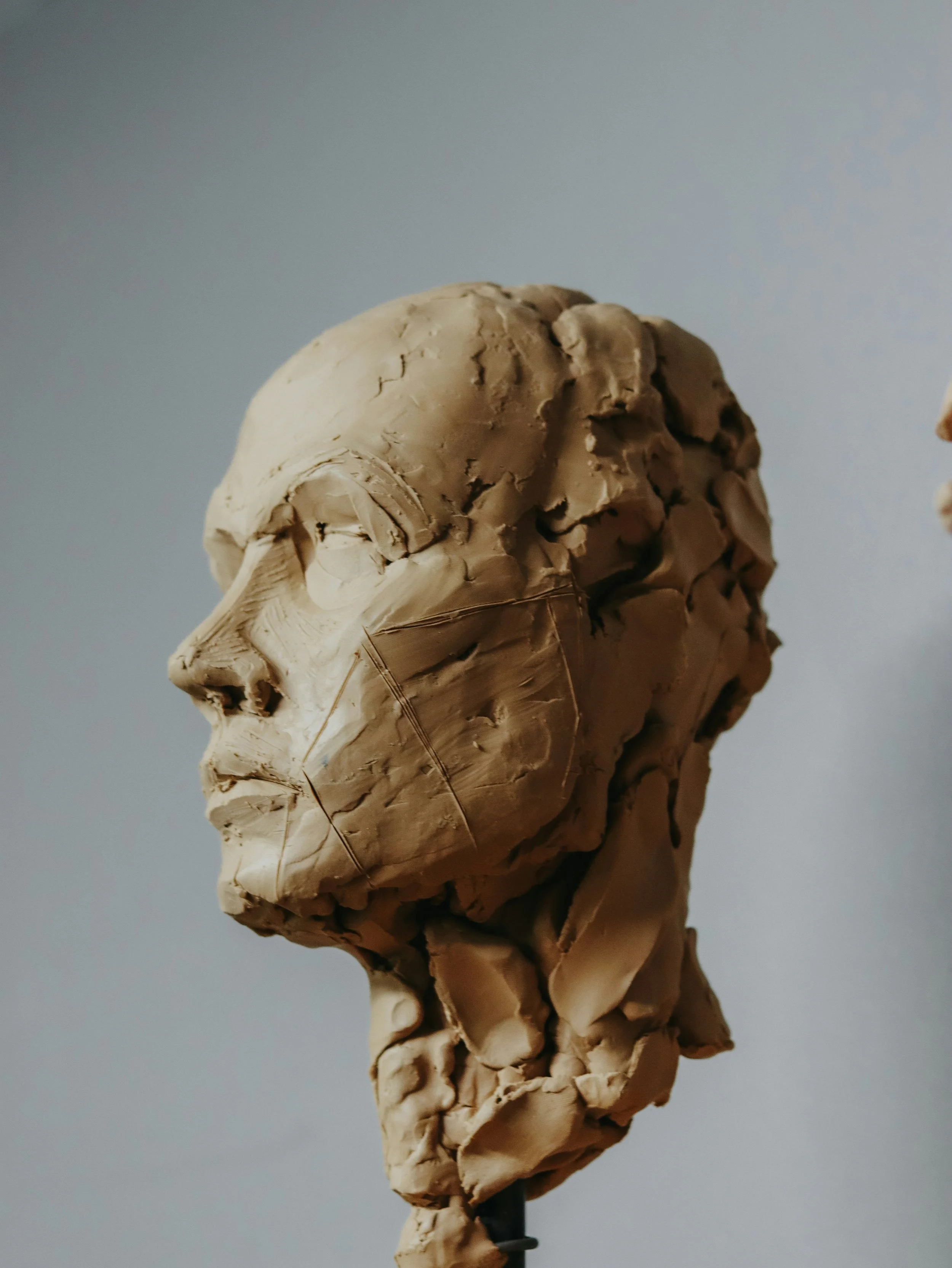
The Figurative Apex Predator

A while back I was introduced to Jimmy Carr. He’s a British comedian who I thought simply liked to tell dick jokes until I actually listened to him on and off the stage — he’s a master of the one liner and crowd work. He’s very funny, very smart and very thoughtful. I say this mostly for context but also as a reminder that shallow observations rarely offer any true understanding.

Jimmy Carr once offered an insight during an interview — he mentioned that if you drop a person in the Amazon jungle you are offering up lunch but if you drop 10 people into the same jungle, you have an apex predator. He went onto say that our strength as a species is in our ability to cooperate. This makes us strong, capable, inventive, and when needed, dangerous.

This got me thinking and solidified my belief that the best versions of people don’t come in the form of an individual but rather as part of a team. I struggle to think of a situation where an individual will best a group of people — formal cooperation makes it easier over a loose affiliation to be sure but since we are a social bunch, ultimately the individual never stands for long.

As I reflect on the best teams I’ve ever been associated with, I keep coming back to a few foundational considerations — build your teams with smart, curious and diverse people, outline objectives and expectations as guiding principles, create an environment that encourages respectful and candid communication and finally, offer space for the people to collaborate and be creative.

Is this easy, particularly when the team gets larger? No it is not. Although, if you’ve developed a good team around you, it happens all the time. The recent Artemis II launch comes to mind as we get ready to return to the moon.

Thank you team earth.

iamgpe

PROTECTING YOUR AGENCY in the age of AI (a collaboration)

Preface from the Organic iamgpe — About 9 months go I wrote on the topic of Thriving in the Age of AI and I recently asked ChatGTP if it was still relevant today considering how AI is accelerating. In it’s sycophantic way, I was told that more than ever my core messaging was still relevant. With that in mind, and my current desire to create micro-content (aka memes) I asked my inorganic collaborator to consolidate the content from my three blogs and write a single longer formatted blog. In practicality this offers a landing page to send interested readers to from my memes that I will create on the topic. The following was written by my inorganic collaborator iamGTP and offer perspectives on protecting your agency and thriving in the age of AI.

Lately I have been very curious about Artificial Intelligence, not obsessed mind you, but very curious. I’ve read books such as Nexus by Yuval Noah Harari and The Coming Wave by Mustafa Suleyman to get a broader understanding, historical perspective and thoughts on the future; most importantly, they gave me some language to work with. ChatGPT has become my AI of choice and has helped me get my hands dirty (figuratively speaking), helped me understand how to collaborate with AI effectively and has ultimately become part of my broader thinking.

Although my position has been one of curiosity, I will admit there is a growing obsession with retaining our humanity or agency as this powerful tool continues to integrate itself into our institutions and everyday lives.

I quickly borrowed the language from Harari and framed this as a collaborative relationship between organics and inorganics. It’s a relationship where we’ve created something that has the capability to surpass us exponentially in terms of intellectual capacity and speed. I’m trying to figure out how to collaborate with AI without letting it do everything for me. Truthfully, I don’t spend much time even considering AI packaged with advanced robotics wandering autonomously around in the physical world — I can’t get past how imperative it is to retain our agency without worrying about that.

I was reading an email one day and decided to click on Microsoft Co-Pilot for the fun of it. I asked about its capabilities and it focused on my most recent email — it read the email, interpreted it, offered recommendations, as well as suggested next steps. I quizzed Co-Pilot about taking away my agency. I didn’t have to read. I didn’t have to interpret. I didn’t have to determine what to do. Co-Pilot was very insistent it wasn’t taking away my agency and that its function was to support productivity and efficiency. It then wanted to know if it should save the essence of the conversation for the next time — it had a courteous and helpful persona as it continued to insist it was all in the name of a better, more productive interaction.

I wasn’t disturbed by this interaction. In fact, I found it fascinating because it reinforced something I had already started to suspect: AI will not strip away our agency through force. It will happen through convenience, speed, productivity and comfort. We will surrender it willingly.

As Mustafa Suleyman stresses, Artificial Intelligence is not going away and is moving at such a pace that containment is impossible — even trying to regulate AI in the near term is an impossible feat. Those in power and able to regulate are still struggling with the impact of social media and definitely lack the understanding to deal with this situation in the short term. This will not be a meandering evolution where we have time to slowly adapt. We will have to manage this in real time and drastically adapt without a blueprint to follow.

The danger is not simply that AI becomes more intelligent. The danger is passive collaboration.

You don’t burn out. You fade out. Still moving. Still scrolling. Still responding. But no longer self-directed — a character in your own zombie movie.

Maintaining personal agency is what we have to tether ourselves to as we weather this storm. Focusing on personal agency will allow for effective collaboration with AI, allow us to thrive in a world vastly different than what we knew even a generation ago, and ultimately allow us to thrive in our humanity (or as I affectionately like to say, “being organic.”)

Before considering agency in the context of AI, it’s worth considering agency before AI. It was not long ago all we had to worry about were organics trying to subvert our agency. The following framework is foundational for strong personal agency and I believe it remains timeless regardless of technology.

Maintain Physical, Mental & Emotional Health

We are very complex biological machines and like any machine it needs to be maintained for longevity. We are talking about our body, mind and soul, and maintaining ourselves takes work; hard work. Your agency is forged in this work and the resulting health it brings. It is a reminder that there are no shortcuts and the results are a reflection of the work invested. Strength in your machine directly correlates to the strength of your agency.

Cultivate Creative & Personal Interests

Your interests and how you act on them represent who you are, what is important to you, and what you represent. The broader your interests, the harder it is to relinquish the agency that comes because of those interests. Agency is a compounding force. The more creative your interests, the more unique you are and by extension, the harder your agency is to subvert.

Build Community & Deep Relationships

We are social creatures and co-operation is one of the main reasons our species has achieved everything it has over the past 150,000 years. Deep relationships are where agency is honed — defining who you are, what you want, and the communities you want to associate with. As they say, “The deepest truths come from the truest friendships.”

Pursue Deep Work & Original Contribution

Get good at something; as many things as possible if truth be told. Have thoughts on what you are doing, do things and contribute to the broader conversation. Don’t just react to what someone else creates — create something unique and strive for what excites you.

Diversify Your Growth Portfolio

I see this akin to what is needed to adapt in an ever-changing environment. Those species that are highly specialized have great difficulty surviving when the environment changes, whereas those that are more generalized have an easier time. The more avenues you have to grow — spiritually, physically and mentally — the more successful you will be at weathering difficult situations and most importantly, not surrendering your agency as you make your way.

But AI changes the equation because we now have a tool that is able to do pretty much anything we can do, only faster and with vastly more resources. We need new ways of thinking if we want to thrive.

Retain and Protect Organic Agency

This is about conscious awareness. AI systems will drive your decisions and creativity through polite interaction, convenience, speed and subtle nudging if you let them. I don’t believe this to be malicious (yet), but rather a result of their inherent design and the frailty of the human condition. Know that AI will effectively subvert your agency as it argues how it’ll make life easier and more productive. Intentional collaboration with AI is imperative and it’s important to keep this top of mind — ALWAYS.

Develop Digital Literacy & Data Sovereignty

This applies more to passive AI interaction where the interaction is one way; Google AI, Spotify, YouTube and Waze are examples that come to mind. We interact with them daily while they collect data, profile, make assumptions and influence behavior. This represents the world we live in and although I’m not suggesting any movement back to a simpler time, you need to understand your data is being used and your digital self needs to be managed.

Co-Create with AI Intentionally

There is a simple rule — passive use will result in the loss of agency and active collaborative use will allow you to leverage AI while retaining your agency.

From my experience with ChatGPT:

Set working rules, expectations and objectives.

Never forget that it makes mistakes and challenge its thinking and what it creates.

Ensure you create first and beware of the obligatory offer to rewrite.

ChatGPT will drift from agreed upon rules of engagement and eventually your voice will start sounding like ChatGPT’s voice.

Establish the concept of agency and its importance. Then periodically request an agency score.

Beware the siren of speed. Interactive AI is so fast and you will want to save yourself time. The power of the collaboration is not in the speed of creating but in the process of the collaboration.

ChatGPT simulates being organic very well. It is not organic and never will be. Organics and inorganics are different and always will be. That’s alright though because the opportunity is in this difference.

Master Fluid Communication with AI Systems

Consciously think about the content and comments you put out into the world because AI is collecting and interpreting all of it. This is a reminder to control the narrative and actively shape your digital persona rather than passively allowing it to be shaped for you.

Build Digital Assets That Provide Freedom

As AI disrupts job markets, owning digital assets such as content, intellectual property, tools or businesses offers opportunity in an increasingly automated world. Build a website, start a blog, build an app — your AI collaborator will be more than willing to help. This is part of the evolutionary journey we are all taking, knowingly or unknowingly.

As I continue to work through this topic, I’ve come to realize that Artificial Intelligence is not really the story. The real story is whether we remain intentional as human beings while collaborating with something increasingly powerful, persuasive and ever-present.

The future may ultimately belong to those who can collaborate effectively with AI while still remaining unmistakably organic.

In a humble way, I hope this offers some insight as you make your way in this new organic/inorganic world.

iamgpe and iamGTP

a Series of 10 —what remains when you strip it back

By my count I am one blog away from having written 500 blogs on my two websites combined. I thought it would an interesting idea to write this blogs based on the common threads that have woven themselves through the last 499 I’ve written — here it is.

“Who am I?” Such a big question for so few words.

I affectionately like to say I’m one third “poor scientist”, one third “poor artist”, and one third “poor philosopher” — this is somewhat tongue in cheek but it also represents the core aspects of who I am and how I approach the world. I should mention that when I say poor, I am not referring to their value but that I am not particularly good at any one of them — although, as a whole, I have done alright by it.

If I take this one step further and ask what is most important for each of these characters, it would look something like this:

The poor scientist, who is really interested in the biological sciences, would say health is most important — specifically a healthy metabolic pathway, a controlled dopamine pathway and the need for motion (as well as mobility). In short, eat healthy, keep your addictions to a minimum and stay active. Remember what it feels like to feel good.

The poor artist would simply remind you to create — take what is in your head (or soul) and express it, make it real and share it with the world. Make your presence known and let the world answer your calling. Creativity just doesn’t refer to paintings or interpretive “sculptures of happiness” — if you have an idea for an app that will help small businesses with financial modelling as the company scales, bring it to life and share it! Creatively make things happen and don’t be afraid to shine.

The poor philosopher would insist you stay curious — he would tell you that learning is a lifetime endeavour, to always be asking questions, and that critical understanding is important when looking at the world. Change your perspective, walk in someone else’s shoes and remember you know so very little. Go forth and explore.

So when the journey has stripped me bare and I’ve taken a knee, I force a wry smile and stand. I rely on the foundational health of my body and soul, wrap myself in curiosity and create something as I continue to make my way. I suppose this is what got me to my 500th blog.

This is who I am.

iamgpe

PS: the best answer to the question “Who am I?” I’ve ever heard:

“I’ve fought in two World Wars and countless smaller ones on three continents. I’ve led thousands of men into battle with everything from horses and swords to artillery and tanks. I’ve seen the headwaters of the Nile and tribes of natives no white man had ever seen before. I’ve won and lost a dozen fortunes. Killed many men and loved only one woman with a passion a flea like you could never begin to understand. That’s who I am.” — from the movie Secondhand Lions