It's all really just a game...

The following is the original and the rewrite can be found by clicking here.

There is a book entitled "A History of The World in 10 1/2 Chapters"* which is a collection of short stories loosely connected; there is one story called The Dream, in which the main character finds himself in heaven and in part, wants feedback and a judgment - "I wanted, oh, some kind of summing-up, I wanted my life looked at". In the great halls of heaven he was told, "You're OK"..."No, really, you're OK". He confessed later that he was a "bit disappointed", and was told, "most people are, but not to take it as any reflection of himself".

This would be an easy segue into people leadership, regarding timely and constructive feedback for individuals and teams. However, when I first read this, I immediately thought of the metaphor, "Life is a Game" and with all games, when it's over, you want to know how you did...  a segue to gamesmanship it is! 

Technically speaking, gamesmanship is the practice of winning a game or contest by doing things that seem unfair but that are not actually against the rules... but I also want to  look at games in a broader sense - Particularly with "winning", or at least having great fun. We should remember, life is one of those games we all must play and sometimes the situations can be very, very hard, with literal life and death stakes. For the sake of these prose, let's assume we are dealing with a safe and sound version of life.

There are a couple of things that instantaneously come to mind about playing games and gamesmanship:  

  1. What game(s) can you play at?
  2. What are your skills, aptitude, and emotional ability?
  3. Do you know the rules?
  4. Do you know when you are winning, stalemated or losing?
  5. Does the game feed your soul?

I will say up front - DREAM BIG!

But with that said, understand your strengths, and play to them as you will not be able to play every game. Partially, this is a simple matter of "time and space" as you just physically can't do it all, but mostly, the reality is your talents and skills may not lend themselves to you being an astronaut, a singer or a neurosurgeon; there are some games you just can't play - It is just the way it is. When your mother said, "you can be whatever you want to be"... just remember she loves you. For most of us, our skills and abilities will allow us to play many games, keeping us busy and fulfilled. 

Winning, and we might as well get it out there, is defined as gaining, resulting in, or relating to victory in a contest or competition**, and as you know, it can be objective or subjective (look at figure skating), but it is always relative to something. My recommendation is winning should be relative to your personal objectives. In many cases your personal objectives may align with someone else's expectations, but ultimately, how successful you are comes from within. It will make you happier this way.

Knowing the rules of the game is key in my mind. It is in knowing these rules, aligned with leveraging your abilities, that will determine how well you play.... put another way, "the better you understand how something is done, the better you will be at it". And this is where the true definition of gamesmanship comes in - Knowing how to play the game so well, you can leverage this knowledge to your advantage. There was a professional hockey coach named Roger Neilson (1934-2003), who understood the game of hockey and its rules so well, he consistently took advantage of loopholes for tactical advantage or to implement innovative thinking with his coaching. Many rules of the game were subsequently changed because of him and he is honoured in the NHL Hockey Hall of Fame, in the Builder Category. If you want to win, know the rules better than most and align your skills to them.

But how do you know you are winning? Easy, just measure yourself against your objectives and determine what you need to do better or if you are satisfied with the results.

One last thing, do it for the "For the Love of the Game". It will help you through those times when the dice just keeps coming up "snake eyes".***

gpe

* Julian Barnes wrote A History of the World in 10 1/2 Chapters.  

** Winning as defined by BING on the Internet.

*** The odds of rolling snake eyes on two six-sided dice are 1-in-36. In some board games, this roll earns the player a bonus due to it being rare and otherwise disadvantageous.

Working with the whY Generation...

I wrote a blog post called "Creative Problem Solving... a case study" that garnered a surprising amount of commentary, particularly regarding some insights into the Y Generation (Millennials). It was not my intention to talk about one of my most favorite management and leadership topics, but rather use them as a back drop for my "case study" (aka, story) - I was really working the "creative problem solving" angle.  I am sensing they are as energetic as ever, and with 32 million settling into the U.S. workforce alone, I thought I would offer some further thoughts. I have read a white paper or two on the topic, but most of my insight comes from hiring over seventy-five Millennials and managing dozens at any given time - I feel comfortable weighing in. 

If you are wondering where the term came from, it goes something like this... almost twenty five years ago, Douglas Coupland popularized the term Generation X, as well as a generation, in his book by the same name. In great creative fashion, the next generation (those born after 1980-ish), were coined Generation Y... it's still a little fuzzy whether there is an official Generation Z. This is actually a good place to start, as much of the commentary and perspective regarding the Y Generation is coming from the Gen X and the tail end of the Baby Boomers. If you ask the Millennials, they have it all figured out, and the others are the ones with the issues. 

Much of my thinking will come from a Gen X and Baby Boomer leadership perspective, but if you were born after 1980, it may offer you some insights with managing up. Let me paint a picture of the Y Generation, knowing up front, it is with a broad brush.

  • They are smart and educated, which can be accompanied with a healthy dose of self worth.
  • Very technologically and socially savvy, particularly with anything involving personal devices.
  • Yes, they have an air of "entitlement".*
  • There is an enhanced sense of work-life balance.  
  • Collaboration and a sense of "team" are important.
  • If they are not happy, the will move on.
  • They require regular validation and re-enforcement
  • Have aggressive professional expectations.
  • They want mentorship and leadership.

If you are working with Millennials, none of this will be surprising, so lets jump in. 

As leaders, I have seen us fall into this particular trap - Since they are smart, engaging, confident, know technology (we may not), and say the "right" things, we make the mistake of confusing their potential with actual ability (Millennials also make the same mistake, so at least we are all on the same page). I have seen impressed leaders end up with miscast situations, as they have confused potential to do a good job with actual ability. This is a very important point... conversations need to be around "potential" and not perceived "ability". This will help align expectations. Expectations... realistic expectations, are everything.

I remember speaking with a more than a few Millennials six months into their new sales role and they very honestly told me they had mastered their current position and it was time for their promotion; particularly since they had their eye on being a Sales Director in five years. This is where grounded conversations regarding their potential and development of their abilities are needed. I will also tell you up front that when you tell a Millennial it will take five years to develop a set of competencies, they will tell you it will only take them nine months. This is where the label of "entitlement" tends to get bantered about. Development plans, with measurable competencies  are key for constructive conversations, as well as establishing benchmarking for that "superstar" who ultimately does it in nine months.

Millennials are very collaborative, team oriented and socially wired (literally and figuratively). They are prone to speak as, and for the "collective", particularly with issues that may be very personal; they will expect to be heard (and probably agreed with). Transparency in a team setting is everything in my experience - Explain to them who you are, what you expect, the rules, what you like, what you don't like, how best to communicate, when you are wrong, when you are right, when they are right, when they are wrong, ask what they think, translate corporate speak for them, define success and define failure. The Y Generation is thirsty for leaders and mentors who will help them, even when they have it mastered, because deep down know they haven't.

As a leader, the Y Generation will challenge you... they will challenge your ability to develop, retain, motivate and engage - You will become a better leader for it, although it can be quite exhausting.

In the title, I referred to the Y Generation as the whY Generation - Other than being somewhat "witty", I did it because a number of years ago, my HR partner and I presented to commercial leadership, regarding the potential of the Gen Y and the group I led;  "whY" I felt they were important for the future, and why I was having so much fun.

Above pretty much summarizes what I said. The over performance and the pipeline of great talent was just a bonus.

gpe 

* I heard this story of a Millennial who was an entry level sales professional selling cars. At the end of the month, he had missed his quota and did not receive his commission as per his agreement. The next day the parents went to see the General Manager of the car dealership and argued that their son should be paid his commission. The General Manager explained to the parents how the real world works and kicked them out of his office. I don't think the Y Generation were born entitled. 


The art and necessity of trailblazing...

Author's note up front... this is a metaphorical journey that you are about to embark on. Do not worry, this will be fun.

The beaten path

The beaten path

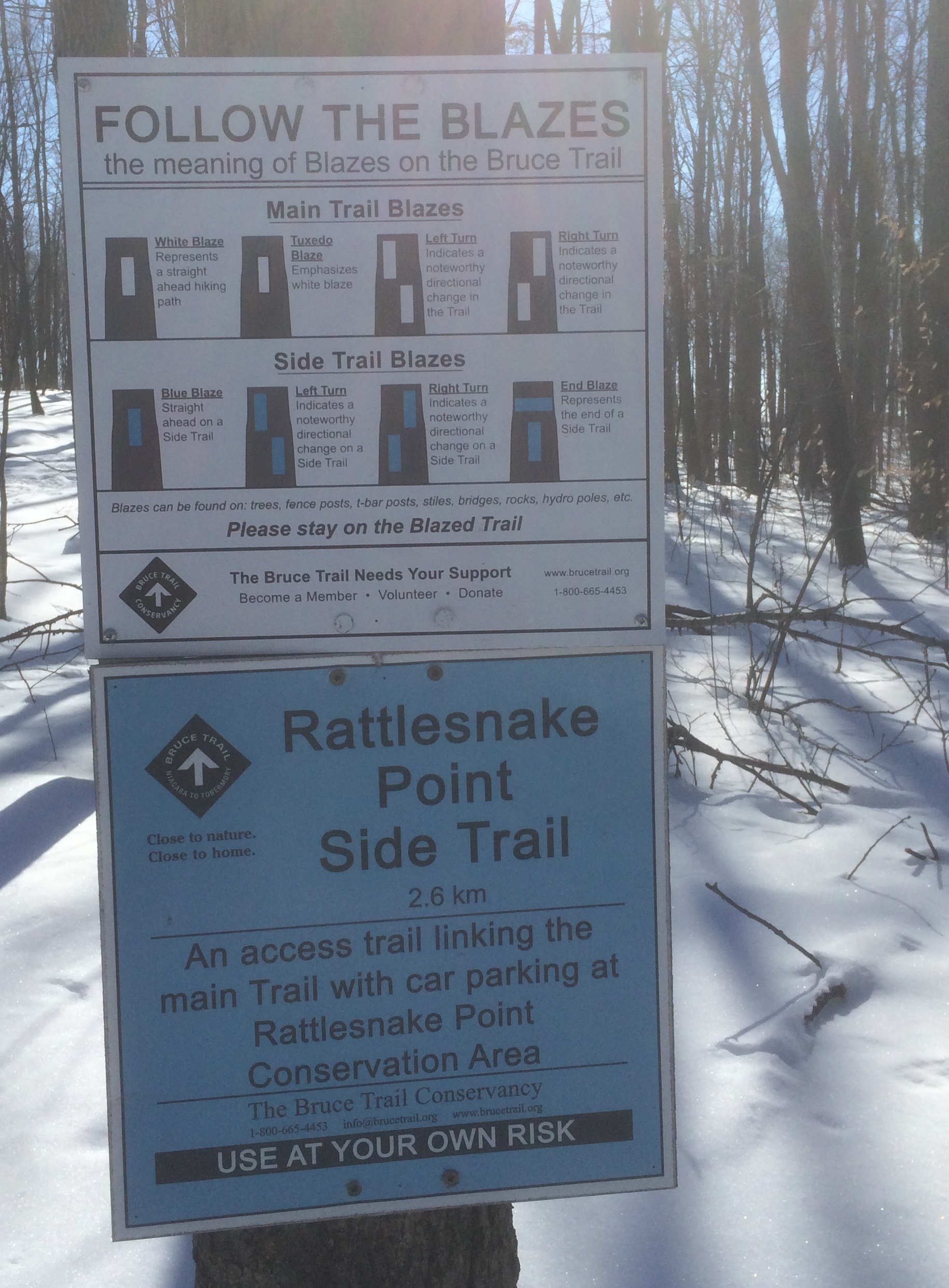
If you live in the northern hemisphere, you are probably getting a little anxious for spring to arrive, as it has been a long winter. Yesterday it was in the air; the day was sunny, the air was clear, and relatively speaking, it was a balmy - 4 Celsius. With this in mind, I found myself hiking at a local conservation area; wandered through the snow off the beaten path (I obviously didn't read the sign). It was here that it struck me I was a bit of a trailblazer. I should be clear upfront that I have hiked and scrambled over these rocks before and I know the area, but now it was covered with thick blanket of snow; fresh and new.

A trailblazer is a person who blazes a trail for others to follow through unsettled country or wilderness. Now in the most literal sense, I wasn't really trail blazing as many people have wandered this area before. But today, in my current situation, there was not a trail to follow and if someone came after me they would most likely walk in my footsteps. Today, I was figuratively trailblazing - Practicing the art and necessity of trailblazing.

  • Trailblazers do not follow the blazes or the beaten path. It is also contextual, as one person's beaten path is an others undiscovered territory.

As I worked my way through the snow, it quickly became apparent that there were hidden boulders, branches and holes. Any of which could trip me up, delay my progress or if I wasn't careful, actually twist an ankle. Progress was slower, more thought-out, as I determined the best path to take. There were indicators, like trees, animal tracks and boulders not completely covered in snow to help find my way, and my hiking experience came in handy.

  • Trail blazing requires more thought and consideration as you work through it. With the beaten trail, more often than not, you can operate on autopilot.
  • Trail blazing can be an individual activity. You need to rely on your own skills and your experiences, and that may be all you have to work with.
  • When you are trailing blazing, there is a good possibility you could find yourself in an uncomfortable situation. There is risk involved.

Making my way with more confidence, I came to a steep incline with boulders and deep crevasses. Stopping to assess the situation it became apparent it was definitely riskier, particularly with the snow covering much of it. After picking up a walking stick, saying "hello" to a raccoon (who had ventured outside), and accessing my progress so far, I decided to continue on my "trailblazing" ways. There was a point where I came to a crevasse that I would have to literally leap; after reviewing the options, the foot holds and my ability, I took that leap of faith - Taking me to the place where I could see the whole valley.

  • Trailblazing involves constant evaluation of the situation so you can modify your approach and acquire the tools you may need.
  • Believe in your abilities and convictions, sometimes there will be a "leap of faith". 
  • You will see wonderful things on the way.

The return journey was not as technically challenging for my footing, but the snow had gotten deeper. The final part of my trek was just tiring, as knee high snow is a challenge to walk in but in the end, I got back to where I started. The air had refreshed me, I felt a sense of accomplishment, I saw some unexpected things and developed my hiking skills.

  • Sometimes trailblazing is just tiring.
  • It develops and reinforces your ability.
  • You can see and experience wonderful things.
  • You learn from trailblazing.

There you have it, my literal and figurative journey through the snow. As I was finding my way, I kept thinking of these words* -

On and on you will hike
and I know you'll hike far
and face up to your problems
whatever they are.
You'll get mixed up, of course,
as you already know.
You'll get mixed up
with many strange birds as you go.
So be sure when you step.
Step with care and great tact
and remember that Life's
a Great Balancing Act.
Just never forget to be dexterous and deft.
And never mix up your right foot with your left.
And will you succeed?
Yes! You will, indeed! 

Trailblazing advocates challenging yourself with the new and different. And in that, prepares for the people who will eventually follow in your foot steps. This is the birthplace of experience and wisdom.

gpe

* From the book, "Oh, the places you'll go" by Dr Seuss.