Some thoughts on inspiration... and I guess leadership.

The following is the original and the rewrite can be found by clicking here

A long time friend* brought the following quote to my attention a couple of days ago, as we were talking about life and its meanderings. It was written by Marianne Williamson and has also found its way into the movie Coach Carter as a tribute to the themes of the story. The quote goes like this -

“Our deepest fear is not that we are inadequate. Our deepest fear is that we are powerful beyond measure. It is our light, not our darkness, that most frightens us. You playing small does not serve the world. There is nothing enlightened about shrinking so that other people won’t feel insecure around you. We are all meant to shine as children do. It’s not just in some of us; it is in everyone. And as we let our own lights shine, we unconsciously give other people permission to do the same. As we are liberated from our own fear, our presence automatically liberates others”. 

It is not my intention to offer an interpretation of this per se, but since we are here, why not? Success does frighten some of us... even to the point that we will very expertly sabotage ourselves to ensure we never quite find it** - Where as with others, they will avoid success as they believe it will come with a feeling that they are somehow fraudulent and at any moment be discovered. Aside from the above comments though, what really struck me about this quote was that it evoked a strong emotional feeling of inspiration, much more than any intellectual interpretation of the words. 

There is a great social complexity with the human condition, our social structures, our interactions, and our desire as individuals to be understood and to understand. The emotion that came with the quote above, at least for me, speaks directly to this desire to be understood and to understand. I will be so bold to suggest that it is not just myself; if you look at the social media streams they are full of inspirational quotes and videos that speak to - 

  • Personal growth
  • Individuality
  • Struggle, success and failure 
  • Love and heartbreak
  • Understanding

Just to name a few.

So I think it is fair to say, more than ever, that the "collective" inspires and feeds our need to be understood and to understand. It just struck me now that I should offer a definition for the word "Inspire" and it goes something like this, "to fill (someone) with the urge or ability to do or feel something"; inspiration, by extension, is the act to inspire. How neatly my thoughts are coming together don't you think? This aspect of inspiration feeds the feelings and emotions of our desire to be understood and to understand... it helps us find our way. So the collective is feeding this desire to be inspired... but what about when we look to the individual - And this I guess, brings us to leadership.

My intention here is to offer a perspective on leadership as it pertains to what we have been discussing... and yes, I know it's mostly been a monolog so far, but a dialogue is just a comment button away. I have found that leaders, and by extension leadership can be defined in two ways; Selfless Leadership and Selfish Leadership.

Selfless Leaders, tend to see their people as more valuable than themselves, participate with and understand them, and strive to develop an environment of trust; with mutual success. They more often than not, through their words and actions, evoking that emotion which leads to that connection and trust needed to be successful in our social structure.

Selfish Leaders, tend to see people as a resource for their personal needs and agenda, focus only these agendas and display little interest in people or any mutual success, other than any required operational function. I have found selfish leaders tend to offer little in the way of emotion that drives this feeling of being understood and understanding - Never creating a connection or trust.

And why should you care about any of this? Well... if you are involved with a team, couldn't it be said a team is really just a micro reflection of the great social complexity of the human condition, our social structures, our interactions, and our desire as individuals to be understood and to understand? And if so, you know what they say about how Great Teams Doing Great Things.

All of this just because I read a quote by Marianne Williamson and was inspired.

gpe

* The long time friend I refer to is "The Duke", who I mentioned in my blog entitled "Reflections" (Dec 31, 2014). I will be curious to see if he drinks his bourbon straight up the next time we go out (none of this will make sense unless you have read the post, but it sure has made me smile).

** Dr Brene Brown alludes to sabotaging her success by flying just under the radar in one of her TED talks, as well as discusses much, much more (I have attached the talk). If you are not familiar with Brene I encourage you to check out her two TED talks and even her books. She is a qualitative researcher by training and has explored the areas of shame and vulnerability. It is interesting, thought provoking, enlightening and very entertaining.
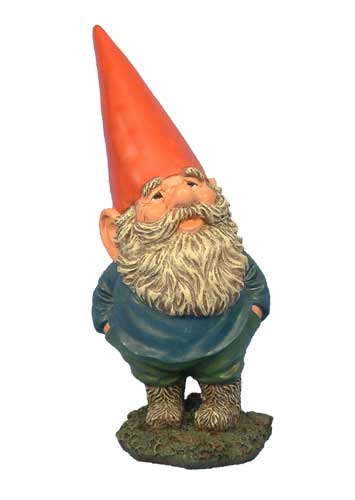
The Business Gnome

The following is the original and the rewrite can be found by clicking here.

It's been a little over 90 days since I have been blogging under the unicorn banner of GPEStratagem and I wanted to quickly say, "Thank you for reading". I also wanted to take a moment to ground us as to what I story tell about - Specifically, I am interested in out of the box thinking as well as creative problem solving, particularly in the areas of sales and marketing; this of course can run the gamut including situation analysis, planning, problem solving, leadership, execution, process improvement, organizational behaviour and of course the customer. With all of this said, it is probably time to mention the rarely seen, but very much believed in, Business Gnome.

I've heard the business Gnome looks like this...

I've heard the business Gnome looks like this...

A very dear friend of mine, who I hope is finding great fun and adventure at the moment, introduced me to the Business Gnome a number of years back. For those of you who are not familiar with the Business Gnome, it is a genus of "mystical individuals" who get things done when people don't think of it, assume it'll will get done, don't want to do it, or don't know how. The Business Gnome falls into a number of different species, such as the "Technology" Gnome, the "Marketing" Gnome, the "Clean up your mess" Gnome (which has a domesticated cousin), and so on. Business Gnomes, like "tribbles" (yes a Star Trek reference), are cute and cuddly, but if they get into the machinery they will totally mess up effective execution and most definitely impact your customer's experience.

Let me offer you an example of what I am talking about - A small company was sponsoring an event which involved developing a process to sell the event tickets online and went live with it. It turned out when a customer went to order a ticket, the only option available in the drop down menu was zero. After that was fixed, it became apparent that there was no electronic ticket that was actually sent to the person who had ordered... just a receipt indicating that their credit card had been charged. In all of this, it is obvious that someone looked to the "Technology" Gnome to ensure it all worked when they set up the process. It was a good thing the company was so customer oriented as they caught this with the first order and fixed the situation. They went on to have an amazing event and the Technology Gnome was conspicuously absent. 

As you can appreciate there are two camps regarding the existence of the Business Gnome and I don't want to spend time debating their actual existence but instead spend a little time on the "people and company cultures" that do believe in them... or at least act as if they do. 

People (and cultures) that don't take the customer's perspective in what they do are big believers in the Business Gnome, and look to them to ensure that all of their initiatives and processes work smoothly. To this point let's use the situation with the event tickets above - If, before they went live with the ordering system, someone had said, "Let me pretend I am a customer and see how this works", they would have discovered very quickly that they had some "gaps" in their process, and ultimately in the customer experience. Those who think like customers don't believe in Gnomes.

There also seems to be a correlation with people not knowing the systems and processes that they use and their belief in Gnomes. Many a time I have seen a brilliant idea come crashing into reality because of the limitations of the systems and processes that are available... somewhere, somehow, someone must have had faith in the "Operations" Gnome to make it all work. As an extension to this, there are people who are miscast for the task ahead but "do it anyway", without soliciting help and the resources needed to make it happen. They must be big believers in the "Hope and a Prayer" Gnome. 

And lastly, the biggest playground for Business Gnomes that I have seen is where there is a culture of assumption... Assuming it will get done, assuming the resources are there, assuming the skill sets are in place, assuming the customer thinks like you, assuming there is someone to pick up after you, assuming the system will do what you want it to do, assuming your pilot project will scale - Hopefully you get my drift, and if you find too much assumption going on, you most likely have a deep seeded belief in Gnomes. 

Of course, encouraging Personal Leadership, Ownership and an understanding that everything is connected can create a culture of accountability... dispelling the mythology of the Business Gnome. 

Let me know if you have seen a Gnome, and do remember that "Car Key" Gnomes are very real.

gpe

Thank you...

This post, although short, is very special as it is dedicated to the 10 people who currently subscript to my bi-weekly blog. I wanted to take the time to thank you for subscribing; it's not just that though, I also want to thank you for your feedback, your editing, your interest, the "retweets", your ideas and your comments.

In the three months (as of today) that I have been blogging, I have discovered a number of things:

  1. I really, truly, like writing... wait... it's more like story telling I think.
  2. The process I go through is the same, blog after blog... I start off with an idea, then words on the page which lead to this emotional roller coaster: "I like this".... "I hate this"..."grammar is stupid (and so is spelling)", and ultimately "this is pretty good" - SEND.
  3. I don't know why people are afraid of punctuation? The semi colon is so much fun. Use as you see fit.
  4. It seems I have an opinion on many things.

I am not "pushing" this post out to any other social media, so in a practical sense you are currently the only ones who will read these words, and for that I am very grateful. I want to share this with you with great appreciation.

"I hope you will have a wonderful year, that you'll dream dangerously and outrageously, that you'll make something that didn't exist before you made it, that you will be loved and that you will be liked, and that you will have people to love and like in return. And, most importantly (because I think there should be more kindness ad more wisdom in the world right now), that you will, when you need to be, be wise, and that you will always be kind."

Neil Gaiman wrote this, who if you do not know, is the husband of Amanda Palmer... and we all know the big crush I have on her.

As they say, "all writers start with zero readers". Thank you for being my first ten.

gpe