Valentine's Day is coming...

The following is the original and the rewrite can be found by clicking here
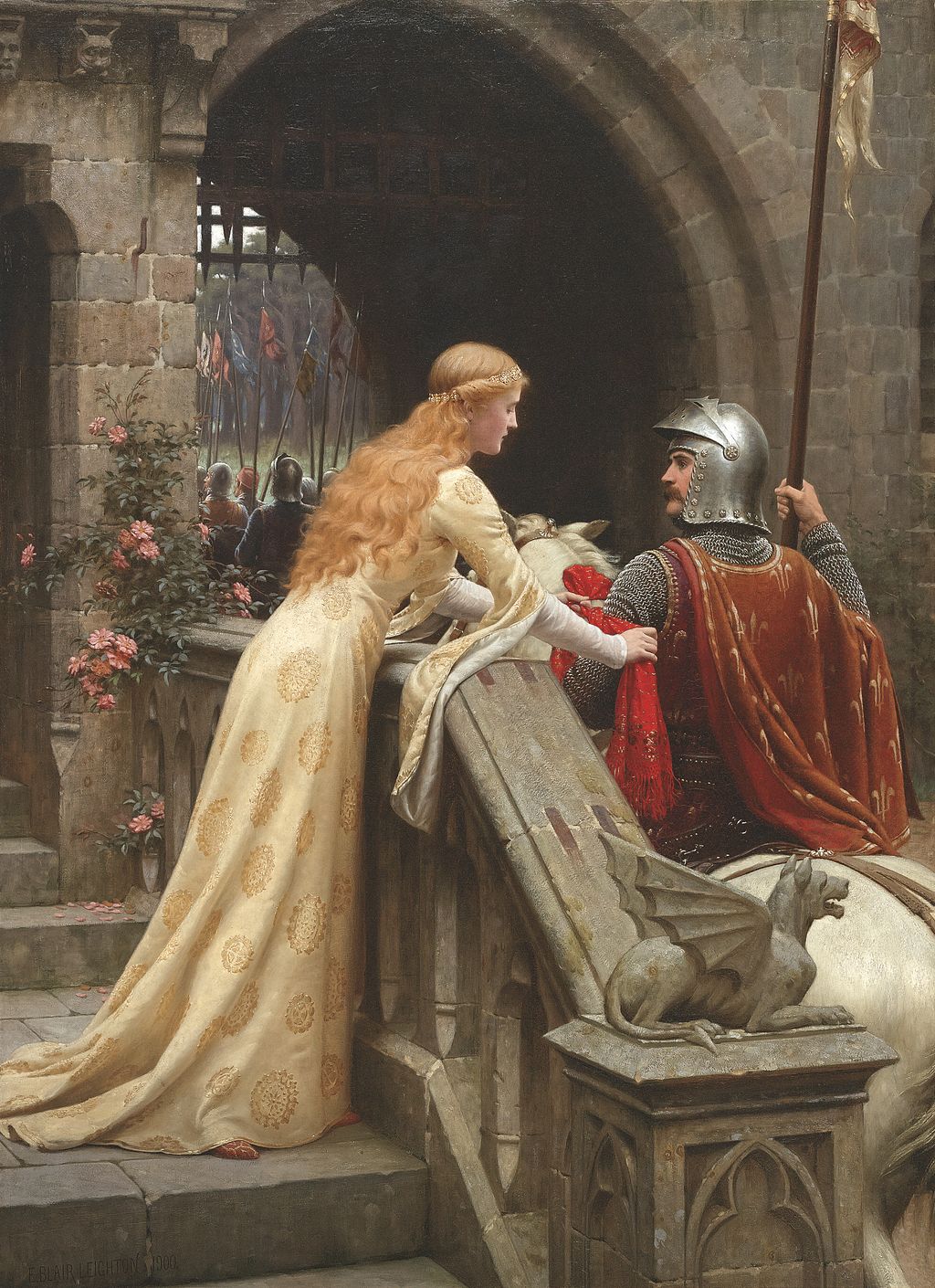
Courtly love... the romance of knights and princesses.

Courtly love... the romance of knights and princesses.

Various legends, good PR and time, has suggested that the first Valentine's Day card was written by Valentine himself. He wrote it to the daughter of his jailer, who was no longer blind due to Valentine's divine intervention and signed it, "Your Valentine." The next day they executed him. It seems back in the day there were a number of martyrs named Valentine, and through their trails and tribulations, February 14th became a special day. 

Romantic and courtly love started to take hold and by the 18th century February 14th had evolved into a day for the sharing of flowers, candies and hand written cards (called valentines) with those you loved. With the advent of the industrial revolution and the mass production of greeting cards, modern Valentine's Day was born. 

Fast forward to the 21st century and Valentine's Day has now evolved into a commercialized venture with roses at $15 a piece and overly priced restaurant meals; with this, year after year, a counter revolution to this sacred day has been growing (in light of those thrown to the lions). While part of this is the result of higher than usual pricing, there is also those who do not have a "love" at the moment or "are not a couple" and this day comes across as a condescending slap in the face. We have all known heartbreak, a love lost or a love never realized and it can be painful... quite a lot actually. We just don't need the Valentine's Day industrial complex reminding us.

So it is an interesting situation we have here, as love and the recognition of love is a very noble endeavour but it has evolved in such a way that we want to "stab it" in the proverbial heart with cupid's arrow. What are we to do? As with all problems, it requires a different perspective to help us understand the situation; and this is where wise mentors or just down right smart people come into play (this is my subtle business commentary in an obviously social, lighthearted, blog)*. In the case of this Valentine's Day situation, I turned to the master Louis Armstrong or as we like to call him, 'Satchmo". For those of you who are not familiar with Louis Armstrong, he was an American jazz trumpeter, singer, and arguably the most influential figure in jazz music. It was Satchmo who introduced me to the song "What a Wonderful World" and a new perspective on Valentine's Day; the song is a bit of an anthem for me and it goes like this:

I see trees of green, red roses too
I see them bloom for me and you
And I think to myself what a wonderful world.

I see skies of blue and clouds of white
The bright blessed the day, the dark sacred night
And I think to myself what a wonderful world.

The colors of the rainbow so pretty in the sky
Are also on the faces of people going by
I see friends shaking hands saying how do you do
But they're really saying is I love you.


I hear baby's crying and I watched them grow
They'll learn much more than I'll ever know
And I think to myself what a wonderful world.
Yes, I think to myself what a wonderful world.

I look at Valentine's Day not in the limiting context of a couple staring into each other's eyes**, but more as to how Louis Armstrong sang of this wonderful world. It is the line, "I see friends shaking hands, saying how do you do, but what they're really saying is I love you", that gives me a new perspective of what Valentine's Day should mean (and does mean). So go shake someone's hand or give them a big hug, as frankly, it's more meaningful than a $15 rose. I think it's how many of those Valentines would have wanted it.

So here's to this wonderful world, particularly on Valentine's Day.

gpe

*Do you have your "go to list" of experts and wise council that you can refer to? You should.

**Couples staring into each other's eyes, is one of the top ten things a couple can do together, maybe even the top three.


Execution... some more thoughts.

The following is the original and the rewrite can be found by clicking here.

Believe it or not I am actually going to start with telling the story of my garage door opener (GDO) and meander my way through some thoughts on execution - And maybe something else, that at first blush may seem counter intuitive, but is worthy of consideration. Let's see how I do; with great appreciation for your patience in advance.

A typical garage door opener... the gear in question is on the top

A typical garage door opener... the gear in question is on the top

For those of you who are not familiar with a garage door opener, it is fair to say it's probably up there as one of the greatest inventions ever. Well, mostly for anyone who owns a car and has a garage to put it in. It works something like this... as you approach your garage, you push a button that magically sends a signal to a box hanging in your garage and upon receiving the signal, turns a chain that pulls the garage door up. Once you are in the garage, you push the button again and the box reverses the direction of the chain and the garage door closes. Nice and easy. You can see why people with cars love them, particularly in the northern climates. With this said, one day I pushed the button and the GDO sounds like it is doing it's job, but the door is not moving! After a quick assessment of the situation, I could see the gear that moves the chain had sheared off.

Now I have a problem and it's winter, so this is particularly inconvenient... I mean, now I actually have to lift the door manually. It quickly becomes apparent that I have three obvious options: A) don't fix the GDO and open it manually (like a million other people do), B) just buy a new GDO, and C) replace the gear that had been sheared off. Plan A became my current default and was workable for the short-term, but since the GDO also acted as a lock it wasn't a long-term fix. Plan B was easy but probably the most expensive, and Plan C, which most likely was cheaper but I was not sure if repairing it was possible. I would investigate Plan B and C in parallel. (First Execution thought - Investigate the situation and identify the problem(s), as well as develop a series of prioritized possible solutions. This is where you have to start.) 

Off to my local hardware store I went to understand how much a new garage door opener would be and also investigate if they had the part to repair my current one. What I found out was a new GDO would cost about $200 and that I could get the part I needed, but directly from the manufacturer which usually was expensive. As I was speaking to the clerk, he suddenly said, "follow me" and I did. Soon he was showing me a non functioning demonstration unit exactly like my GDO, which was destined to be scrapped - $20 later I was the proud owner of the demonstration unit with the coveted replacement gear inside. I had decided to go with Plan C, repair the GDO. (Second Execution thought - Develop an understanding and feasibility of your plan (s), as well as acquire the resources needed. Once you have decided your direction, focus all your resources on it).

So now, in my mind, it's just a matter of taking the gear out of the $20 demonstration unit and replacing the broken one with it. Out come my tools - I quickly dismantle the demonstration unit, retrieve the replacement gear, and then dismantle the GDO and remove the broken gear. To my surprise, there was a big cog on the broken part but not on the replacement part... no worries, I will just switch the cog over to the replacement part and then I am set. It didn't take me long to realize that I couldn't get the cog off and I needed the right tools to do it, which of course I did not have. It did cross my mind that maybe I should just go buy a new GDO. (Third Execution thought - Problems have agendas of their own, and more often than not they are not in alignment with yours. Don't assume that solving problems will be easy. Also, stay focused on your plan and don't let the other possible solutions distract you. Shame on me for even thinking about buying a new GDO)

I needed a machine shop; a quick Google search and a short drive later, I was telling a machinist my troubles. Ten minutes after that, he had moved the cog over to the replacement part and I now had my replacement gear all ready to be installed. He didn't even charge me saying it was a favour. The reassembly was straight forward and soon enough I had my functioning GDO back up and running. (Forth Execution thought - more often then not, you need a team to solve your problem and execute on it. Look to those people and resources you need to solve the issue; resource management is key to your success. As I have mentioned, problems have their own agendas and usually aren't straight forward or easy; sometimes the universe sends a favour your way... so don't forget to repay it in kind somewhere else.) 

So there you have it - Ultimately I was able to repair my garage door for $20 plus the time it took to do it, as opposed to just buying a new one for $200. As I look back on my little "handy man" adventure, I am struck by something else, something counter intuitive. Maybe we shouldn't necessarily look to that which is easy, as we learn and grow from challenge and adversity.

We naturally look to that which is easy, comfortable and known, while conversely we shy away from that which is difficult, unknown and perceived to cause pain and discomfort - But maybe we should look to that which is difficult. Looking at my GDO situation, I could have just bought a new GDO and installed it easily, and although it was $200, it would not have broke me. However with deciding to repair the GDO, which in comparison was not as easy, I expanded my knowledge base, made new connections, developed some new skills, challenged my thinking process, and ultimately saved $180. I gained so much more by not buying a new garage door opener. 

Easy... while being "easy", does not really allow you the opportunity to learn, develop, master adversity and grow; also as we look back at my story, the easiest solution was not the best economic route to take. As much as we may want it all to come easy, it is actually in our best interest to embrace the adversity and the challenges that comes our way. 

So when you are looking at your possible solutions to execute on, don't instinctively default to what is easiest; it may not be good for business, and most definitely will not help you grow. And one last point, and I think it's an important one, doing what's easy tends to be the result of familiarity and having done it before - So doing what's easy runs in the face of doing things differently - And we know how important different is.

gpe 


Some thoughts on inspiration... and I guess leadership.

The following is the original and the rewrite can be found by clicking here

A long time friend* brought the following quote to my attention a couple of days ago, as we were talking about life and its meanderings. It was written by Marianne Williamson and has also found its way into the movie Coach Carter as a tribute to the themes of the story. The quote goes like this -

“Our deepest fear is not that we are inadequate. Our deepest fear is that we are powerful beyond measure. It is our light, not our darkness, that most frightens us. You playing small does not serve the world. There is nothing enlightened about shrinking so that other people won’t feel insecure around you. We are all meant to shine as children do. It’s not just in some of us; it is in everyone. And as we let our own lights shine, we unconsciously give other people permission to do the same. As we are liberated from our own fear, our presence automatically liberates others”. 

It is not my intention to offer an interpretation of this per se, but since we are here, why not? Success does frighten some of us... even to the point that we will very expertly sabotage ourselves to ensure we never quite find it** - Where as with others, they will avoid success as they believe it will come with a feeling that they are somehow fraudulent and at any moment be discovered. Aside from the above comments though, what really struck me about this quote was that it evoked a strong emotional feeling of inspiration, much more than any intellectual interpretation of the words. 

There is a great social complexity with the human condition, our social structures, our interactions, and our desire as individuals to be understood and to understand. The emotion that came with the quote above, at least for me, speaks directly to this desire to be understood and to understand. I will be so bold to suggest that it is not just myself; if you look at the social media streams they are full of inspirational quotes and videos that speak to - 

  • Personal growth
  • Individuality
  • Struggle, success and failure 
  • Love and heartbreak
  • Understanding

Just to name a few.

So I think it is fair to say, more than ever, that the "collective" inspires and feeds our need to be understood and to understand. It just struck me now that I should offer a definition for the word "Inspire" and it goes something like this, "to fill (someone) with the urge or ability to do or feel something"; inspiration, by extension, is the act to inspire. How neatly my thoughts are coming together don't you think? This aspect of inspiration feeds the feelings and emotions of our desire to be understood and to understand... it helps us find our way. So the collective is feeding this desire to be inspired... but what about when we look to the individual - And this I guess, brings us to leadership.

My intention here is to offer a perspective on leadership as it pertains to what we have been discussing... and yes, I know it's mostly been a monolog so far, but a dialogue is just a comment button away. I have found that leaders, and by extension leadership can be defined in two ways; Selfless Leadership and Selfish Leadership.

Selfless Leaders, tend to see their people as more valuable than themselves, participate with and understand them, and strive to develop an environment of trust; with mutual success. They more often than not, through their words and actions, evoking that emotion which leads to that connection and trust needed to be successful in our social structure.

Selfish Leaders, tend to see people as a resource for their personal needs and agenda, focus only these agendas and display little interest in people or any mutual success, other than any required operational function. I have found selfish leaders tend to offer little in the way of emotion that drives this feeling of being understood and understanding - Never creating a connection or trust.

And why should you care about any of this? Well... if you are involved with a team, couldn't it be said a team is really just a micro reflection of the great social complexity of the human condition, our social structures, our interactions, and our desire as individuals to be understood and to understand? And if so, you know what they say about how Great Teams Doing Great Things.

All of this just because I read a quote by Marianne Williamson and was inspired.

gpe

* The long time friend I refer to is "The Duke", who I mentioned in my blog entitled "Reflections" (Dec 31, 2014). I will be curious to see if he drinks his bourbon straight up the next time we go out (none of this will make sense unless you have read the post, but it sure has made me smile).

** Dr Brene Brown alludes to sabotaging her success by flying just under the radar in one of her TED talks, as well as discusses much, much more (I have attached the talk). If you are not familiar with Brene I encourage you to check out her two TED talks and even her books. She is a qualitative researcher by training and has explored the areas of shame and vulnerability. It is interesting, thought provoking, enlightening and very entertaining.